Why the E38 needs help
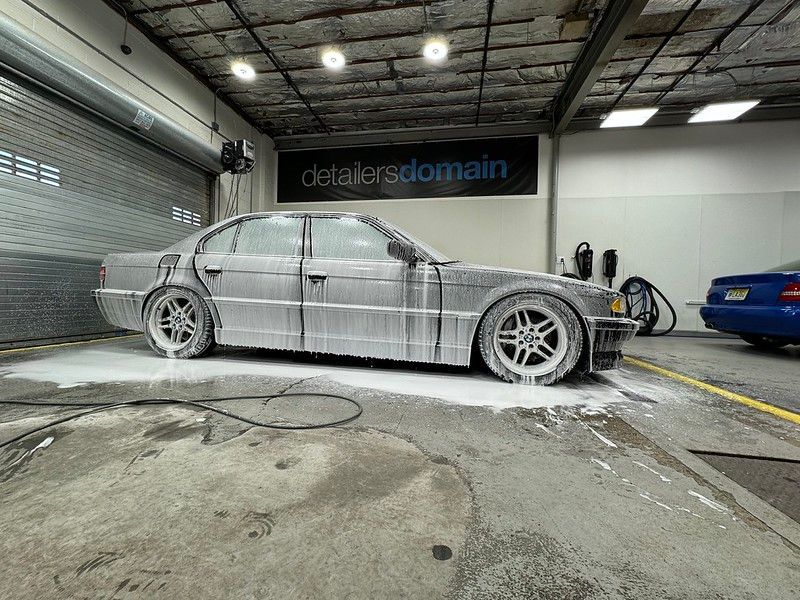
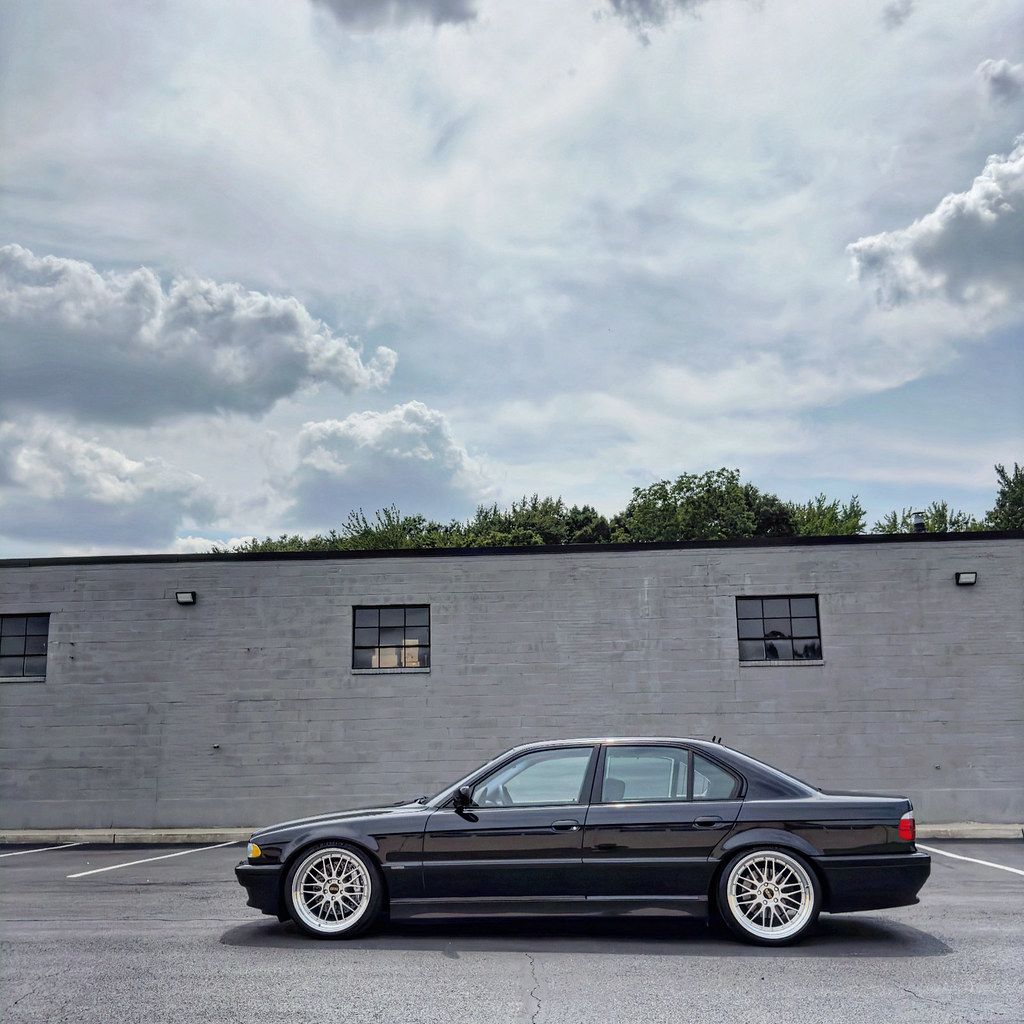
The E38 750iL is one of the most underrated chassis BMW ever built. In 1998 it was a technological flagship, but the suspension components were designed for comfort, not longevity. Twenty-five years later, every rubber bushing is shot, the dampers are blown, and the brakes are barely adequate for a car this heavy.
Phil has owned his E38 for years and has systematically rebuilt every component that touches the road. The goal was never to make it something it isn't. The goal was to make it what BMW would have built if they had prioritized handling as much as ride quality.
Suspension: Start with the bushings
Before touching dampers or springs, the control arm bushings need to go. The originals are rubber, and after 25 years they are cracked, compressed, and allowing far more movement than BMW intended. Phil replaced every bushing in the front subframe with Lemforder OEM replacements, and the rear with Meyle HD units.
- Front thrust arm bushings (Lemforder or Meyle HD)
- Front control arm bushings (OEM BMW or Lemforder)
- Rear subframe bushings (OEM rubber, not polyurethane)
- Dampers (Bilstein B6 Heavy Duty, all four corners)
- Stock-height springs (maintains factory ride height)
Dampers and springs
Phil went with Bilstein B6 dampers paired with stock-height springs. The B6 is a monotube design that handles heat better than the twin-tube originals and provides noticeably firmer rebound control. The car still rides well on rough pavement, but body roll in corners is dramatically reduced.
Brakes: The upgrade that changes everything
The stock E38 brakes are adequate for normal driving, but they fade quickly under repeated hard stops. The 750iL weighs over 4,400 pounds, and the factory single-piston calipers simply run out of thermal capacity.
Rotors and pads
Zimmermann cross-drilled rotors front and rear, paired with Hawk HPS pads. The Zimmermann rotors are German-made and designed specifically for European performance cars. The cross-drilling helps with heat dissipation and wet-weather performance.
Lines and fluid
Stainless steel braided brake lines replaced the rubber originals. This eliminates the sponginess that comes from line expansion under pressure. Combined with fresh Motul RBF 600 fluid (which has a much higher boiling point than DOT 4), the pedal feel is transformed.
The result
The car drives the way it looks like it should. Turn-in is immediate, body roll is controlled, and the brakes inspire confidence that they simply didn't before. The ride quality is still comfortable enough for long highway drives, but the chassis now communicates what the road surface is doing instead of filtering it all out.
The best upgrades don't change what a car is. They reveal what it was always capable of.