Run your fingertips over the hood of a car that has been driven all summer, right after a wash, and it feels rough. Fine grit that a mitt did not lift. Look closer at the lower doors and there are black flecks behind the wheels, dull patches under where the tree was, and a few bug outlines on the bumper that have been there since July. The car is clean. It is also covered.
That layer is the whole point of a fall decontamination. Everything that landed on the paint between May and September is still on it, and most of it has bonded by now. A wash takes off what is loose. What is bonded stays, and in a few weeks the first salt truck goes by and the whole thing gets locked under a film of brine until March.
We do a lot of decon work in October for exactly that reason. This is what is on the car, the order we take it off, and why the calendar matters.
What accumulates on car paint over a New Jersey summer
Tar. Fresh asphalt goes down all summer, and the Parkway and Route 17 both spit it up behind the front wheels. It lands as tiny black dots on the rockers and lower doors, and once it bakes on a hot panel it is a solid. A mitt slides right over it.
Tree sap. Anyone who parks under a maple or a pine knows this one. Sap lands as a clear droplet, dries into a hard dome, and if it sits through August it starts to etch the clear coat under it the same way a water spot does. Pine sap is the stubborn one. It goes glassy and it will not move with soap.
Bug residue. Every highway trip in June leaves the bumper and the mirrors covered, and bug guts are acidic. Wiped off the same day, they are nothing. Left through a few hot afternoons, each one leaves a faint etched outline in the paint that stays after the bug itself is gone.
Iron fallout. This is the one nobody sees until they look for it. Brake dust from your own car and every car around you is tiny particles of hot iron, and they embed in the clear coat on contact. They sit on the horizontal panels and behind the wheels, and they rust in place. On a white car they show as tiny orange specks. On a dark car they are invisible until an iron remover turns them red.
Water spots. Sprinklers and hard well water leave mineral rings all summer, and by October some of them have bonded. I wrote a whole post on why water spots etch, so I will keep it short here. They come off in the same decon.
Every one of these is sitting on the paint in October. Together they make the paint rough, dull the gloss, and give the salt something to grip.
Why doing this in October matters before the salt
Salt does two things to a car that is carrying summer contamination. First, it holds moisture against the paint for weeks at a time. Iron particles that were rusting slowly in dry September rust fast in a wet salt film, and the rust spreads under the clear coat around each speck. Tar and sap that were sitting on the paint now have a wet, corrosive layer on top of them, and the etching under each one accelerates.
Second, salt makes it impossible to fix any of this until spring. Nobody is claying a car in a driveway in January, and the constant road spray means the paint never stays clean long enough to work on. Whatever is on the car in November stays on the car until April, and it has five months to do damage.
There is a third reason, which is protection. Anything you put on the paint to get it through the winter, a sealant, a coating top up, a wax, bonds to what it touches. Applied over a summer of contamination, it bonds to tar and iron and sits on top of the rough surface. Applied to decontaminated paint, it bonds to the clear coat and does its job. I covered what a coated car goes through in driving a coated car through a New Jersey winter, and the cars that came out of that winter looking best were the ones that went in clean.

How to decontaminate car paint before winter
This is the order we work in the shop. The order matters, because each step takes off one kind of contamination and leaves the next one easier to reach.
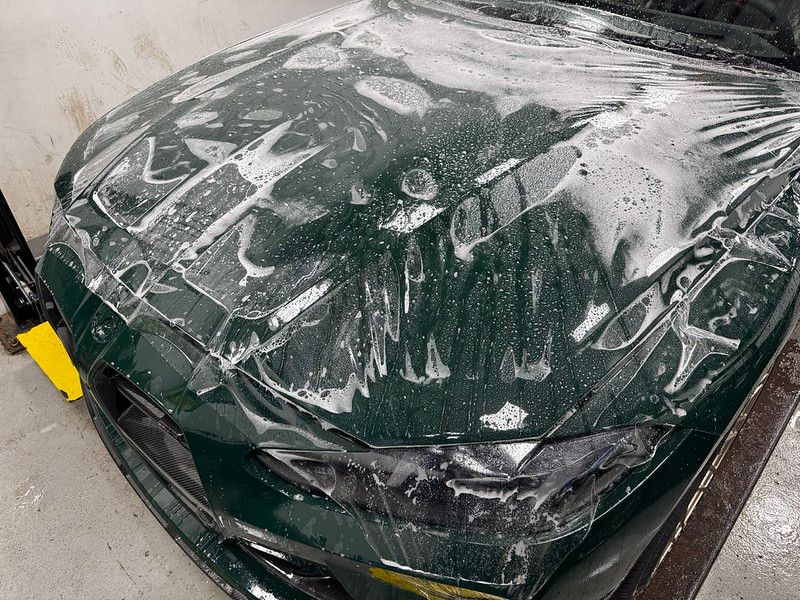
- Wash. A proper pre rinse, then foam, then a two bucket hand wash. We foam with Koch Chemie Gentle Snow Foam, a pH neutral foam that holds an even blanket on the panel for a long dwell and will not strip whatever protection is already on the car. About 20 ml in a liter of water through the foam cannon. The wash takes off everything loose, which is most of the dirt and none of the bonded contamination. That is fine. It clears the field.
- Iron remover. We use Nanolex Wheel Cleaner and Iron Remover, on the paint as well as the wheels. Sprayed on the wet or dry car, panel by panel, and left for a few minutes. The product reacts with the iron particles and turns red as it dissolves them, so you can watch the fallout bleed out of the paint. Heavy on the rear, the lower doors, and the hood. Rinse thoroughly. On a dark car, this is the step that makes people say they had no idea.
- Tar remover. A solvent based remover like Nanolex Tar Remover, sprayed undiluted on the tar spots and the sap with the panel towel dried first, given a minute to soften them, then wiped with a soft towel. The spots dissolve. Pine sap sometimes needs a second application. This step comes before clay because the clay sponge does not like solvents and does not like tar. Get both off first, then rinse the panel again.
- Clay. The Detailer's Domain Clay Sponge with a proper lube like Nanolex Clay Lube, worked in straight lines with light pressure on a cool panel out of the sun. It lifts what the chemical steps left behind, the remaining bonded grit, overspray, fresh sap and water spots, and it rinses clean in water if it picks something up or hits the floor. The feel of the paint changes under your hand as you go. Rough, then smooth. When the sponge glides with no drag, the panel is done. Wipe the lube off with a clean towel.
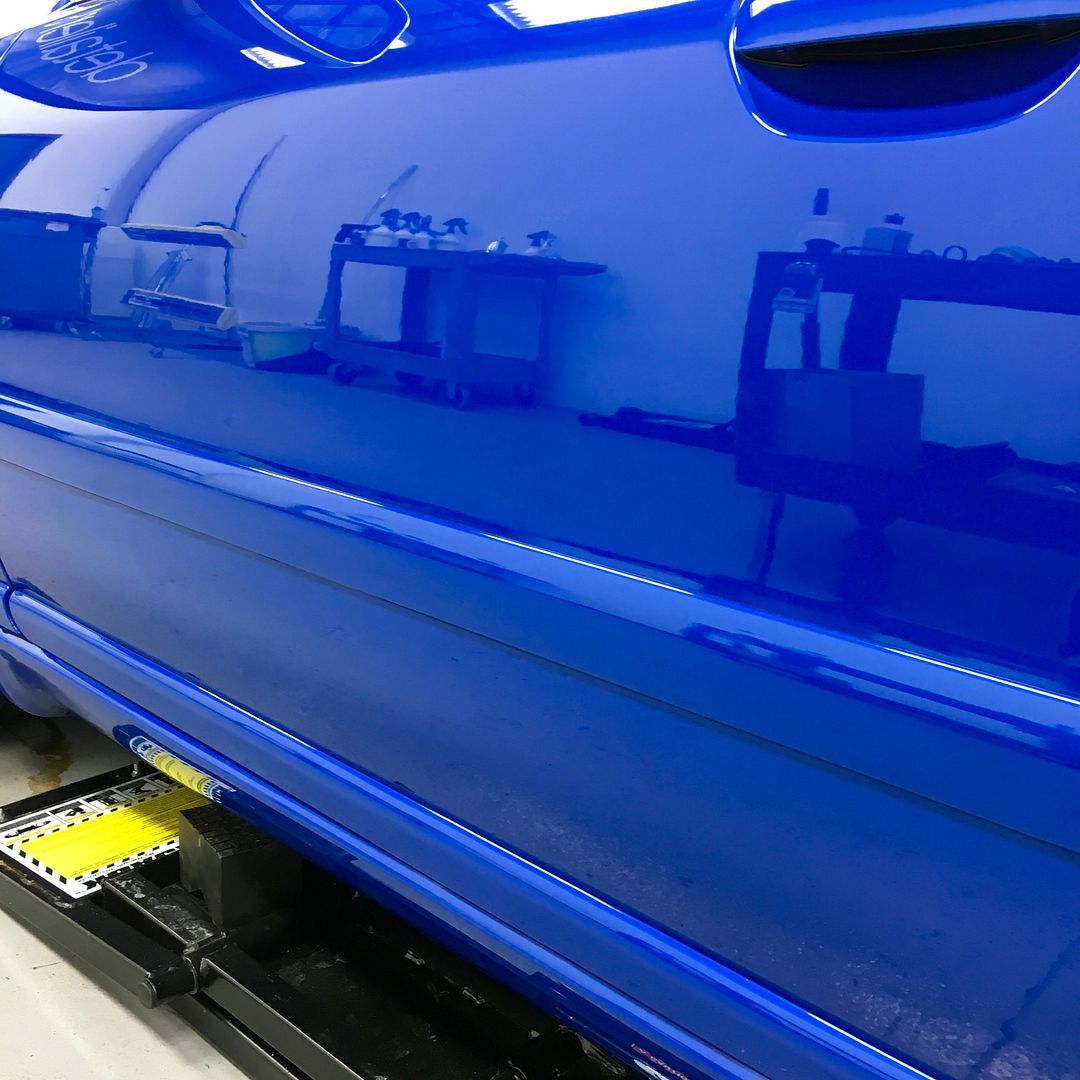
- Inspect. Wipe the car down with Nanolex EX to strip any oils, polish residue or fillers, then put a light on it. This is where the summer's etching shows. Bug outlines, sap craters, water spot rings. Most of it comes out with a light polish. Some of it is fine to leave. Either way, you want to know before the protection goes on, because after that it is under a layer. I went into this in what inspection lighting shows.
- Protect. The paint is now bare, and bare paint in November is a problem. On a coated car, Nanolex WashCoat sprayed on the wet car and rinsed within three minutes refreshes the existing coating and brings the beading back. On an uncoated car, a sealant or a fresh coating goes on. Trim and glass get their own protection. Then the car is dried completely and it is ready for whatever December does.
A full decon on a car that has never had one takes us most of a day. At home, on a Saturday, with the products above, it is a long afternoon, and it is worth every minute of it.
Which decon does your car need this October?
Up to three questions about what is on the paint and what is protecting it. The answer is the order we would work in, the step you can skip, and the product that matters most for your car.
Question 1 of 3
After a wash, is there tar or sap on the paint?
Look behind the wheels and on the lower doors for small black dots, and on the hood and roof for hard clear domes. Tar smears under a fingertip. Sap feels glassy.
Question 2 of 3
Is the car ceramic coated or wearing PPF?
Any coating or any film counts, even just a front bumper. A wax or a spray sealant from the summer is a no.
Question 2 of 3
Is the car ceramic coated or wearing PPF?
Any coating or any film counts, even just a front bumper. A wax or a spray sealant from the summer is a no.
Question 3 of 3
Is any of that protection paint protection film?
A full front, a track pack, or a pair of rocker strips all count. A coating on its own is a no.
Question 3 of 3
Is any of that protection paint protection film?
A full front, a track pack, or a pair of rocker strips all count. A coating on its own is a no.
Your fall decon
All six steps, with the solvent kept away from the film edges
Tar and sap mean the tar remover step stays in, and it has to come before the clay sponge. Film changes how you apply it. The solvent goes on the spots, never flooded across a panel where it can reach an edge.
- The order
- Wash, iron remover, tar remover on the spots only, clay, inspect, WashCoat.
- Near the film
- Spray the tar remover onto a folded towel and dab the spot when it sits close to an edge. Clay the film with plenty of lube and light pressure, and ease off as you reach the edges.
 What we reach for Nanolex Tar Remover, 750 ml Solvent based, sprayed undiluted on a dry panel. Softens tar and sap in a minute so they wipe off before the clay sponge ever touches them. View in the store
 Your fall decon
All six steps, and the coating makes each one faster
Less bonds to a coated surface, so the iron bleeds out quicker, the tar lets go sooner, and the clay sponge glides after a pass or two. The full order still applies, because the tar has to be gone before the clay goes on.
- The order
- Wash, iron remover, tar remover, clay, inspect, WashCoat on the wet car.
- After the decon
- Watch the water on the final rinse. Tight beading means the coating is healthy and WashCoat is all it needs before winter. Water that sheets off flat means the coating is tired and worth a look.
What we reach for Nanolex Tar Remover, 750 ml Solvent based, sprayed undiluted on a dry panel. Softens tar and sap in a minute so they wipe off before the clay sponge ever touches them. View in the store Your fall decon
All six steps, and the last one matters most
Bare paint has had nothing between it and the summer, so the tar, sap and iron are bonded straight to the clear coat. The decon takes them off. Then the paint is completely bare going into November, which is the worst time of year for it to be bare.
- The order
- Wash, iron remover, tar remover, clay, inspect, then a sealant or a coating.
- Before you protect
- Put a light on it after the EX wipe. Sap craters and bug outlines etch deepest into unprotected paint, and it is better to polish them out now than to seal them in until April.
 What we reach for Detailer's Domain Clay Sponge Lifts the bonded grit, overspray and fresh sap the chemicals leave behind. Rinses clean in water and lasts 20 to 40 cars. View in the store
 Your fall decon
Five steps, and the solvent stays on the shelf
With no tar or sap on the car, the tar remover step drops out. On a filmed car that is the best outcome, because the solvent is the one product in the decon that the film edges do not like.
- The order
- Wash, iron remover, clay, inspect, WashCoat.
- On the film
- Iron remover is safe on film, so spray it as you would on paint. Clay with the sponge and plenty of lube, light pressure, and care at the edges.
 What we reach for Nanolex Wheel Cleaner and Iron Remover, 750 ml What we spray on the paint as well as the wheels. Turns red as it dissolves the iron, so you can see exactly where the fallout was. View in the store
 Your fall decon
Five steps, probably a short afternoon
A coated car with no tar or sap is the easiest decon of the year. The iron remover and the clay sponge do almost all the work, and the coating means neither one has much to fight.
- The order
- Wash, iron remover, clay, inspect, WashCoat on the wet car.
- Worth checking
- Watch the water on the final rinse. Tight beading means the coating is ready for winter. Water that sheets off flat means it is time for a look.
 What we reach for Nanolex WashCoat, 500 ml Sprayed on the wet car after the decon and rinsed within three minutes. Refreshes the coating and brings the beading back before the salt. View in the store
 Your fall decon
Five steps, then get something on the paint
Without tar or sap you can skip the solvent. Keep the iron remover even if the paint looks clean. A daily driver almost always bleeds red after a summer of brake dust, even on a car that looked spotless.
- The order
- Wash, iron remover, clay, inspect, then a sealant or a coating.
- Why protect now
- Bare paint going into salt season is exactly what the decon was for. Whatever goes on in October is what stands between the clear coat and five months of brine.
What we reach for Nanolex Wheel Cleaner and Iron Remover, 750 ml What we spray on the paint as well as the wheels. Turns red as it dissolves the iron, so you can see exactly where the fallout was. View in the store What each contaminant looks like and how it comes off
The question I get most often at the counter is some version of "what is that on my paint." The four you will find in October, and what removes each one.
Tar shows as small hard black dots, mostly on the lower third of the car behind the wheels. It smears if you rub it. Tar remover dissolves it. Clay will remove it too, but it loads the clay with tar and ruins it, so do the solvent first.
Sap shows as a clear or amber dome, often with a hard edge, on the hood and roof under trees. Fresh sap comes off with tar remover or the clay sponge. Old pine sap needs the solvent and some patience. If a dull ring is left after the sap is gone, that is etching, and it goes on the list for the polisher.
Iron specks show as tiny orange or rust colored dots on light paint, and as nothing at all on dark paint until the iron remover hits them. They are embedded and they do not wipe off. Iron remover dissolves them. Clay picks up the ones that remain.
Water spots show as pale rings, usually on one side of the car in a sprinkler arc or all over after a hard water wash. Fresh ones come off with the wash and the clay. Bonded ones need a water spot remover. Etched ones need a polish.
Fall decontamination FAQ
How often should I decontaminate my car's paint?
Twice a year for a daily driver in New Jersey. Once in the fall to get summer off before the salt, once in the spring to get the salt off before the sun. A garaged weekend car can go longer.
Can I decontaminate a ceramic coated car?
Yes, and you should. Iron remover and clay are both safe on a coating. The coating makes the whole process faster, because less has bonded. Refresh the coating with a maintenance product afterward.
Is it safe to clay a car with PPF?
Yes, with a clay sponge, plenty of lube, light pressure, and care at the film edges. Keep solvents like tar remover away from the edges and do not let them wick under.
Does iron remover damage paint?
A proper iron remover is pH balanced for paint and safe on clear coat, coatings, and film. Follow the dwell time, keep it off a hot panel, and rinse it fully.
Do I need to polish after claying?
Only if the inspection shows etching or if the clay left light marring. A clay sponge with enough lube on a clean panel leaves very little behind. Put a light on it and decide.
What happens if I skip fall decon and just wax the car?
The wax bonds to the contamination and lasts a fraction of the time it should, and the iron and tar keep working under it all winter. Decontaminated paint holds protection far longer.
What is the best order for iron remover, tar remover, and clay?
Wash, iron remover, tar remover, clay, inspect, protect. Chemicals before mechanical. Tar off before clay, because solvents ruin the clay sponge.
The car you have in October is the car you have in April
The salt covers everything for five months. What is on the paint the day the first truck goes by is what will be on the paint, and working on the paint, the whole time. An afternoon in October with an iron remover, a tar remover, a clay sponge and a bottle of protection is the cheapest paint correction you will ever do, because it is the one that stops the damage from happening.
If the hood feels rough after a wash, bring the car by. We will put a light on it and tell you what is there and how much of it is still just sitting on top.