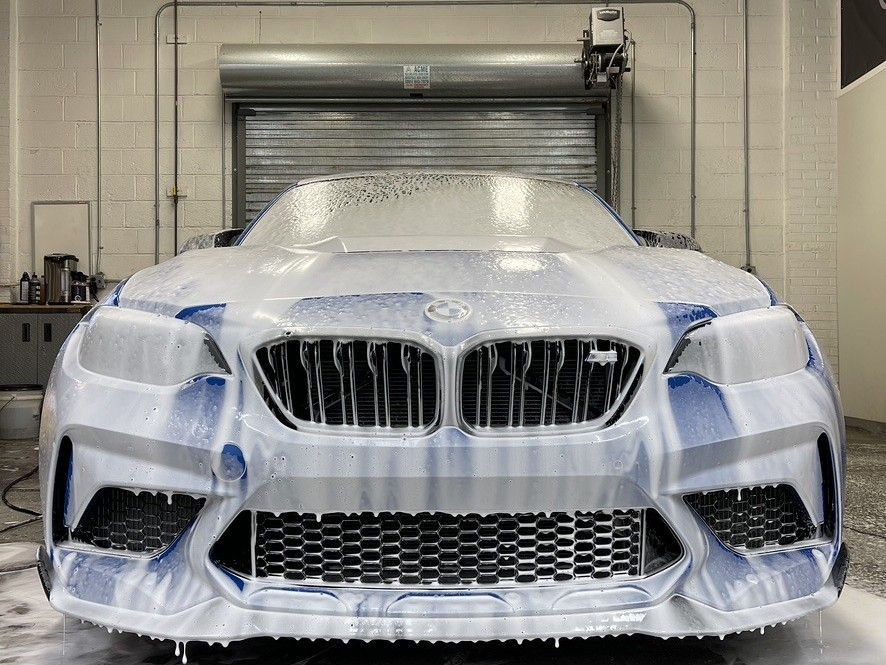
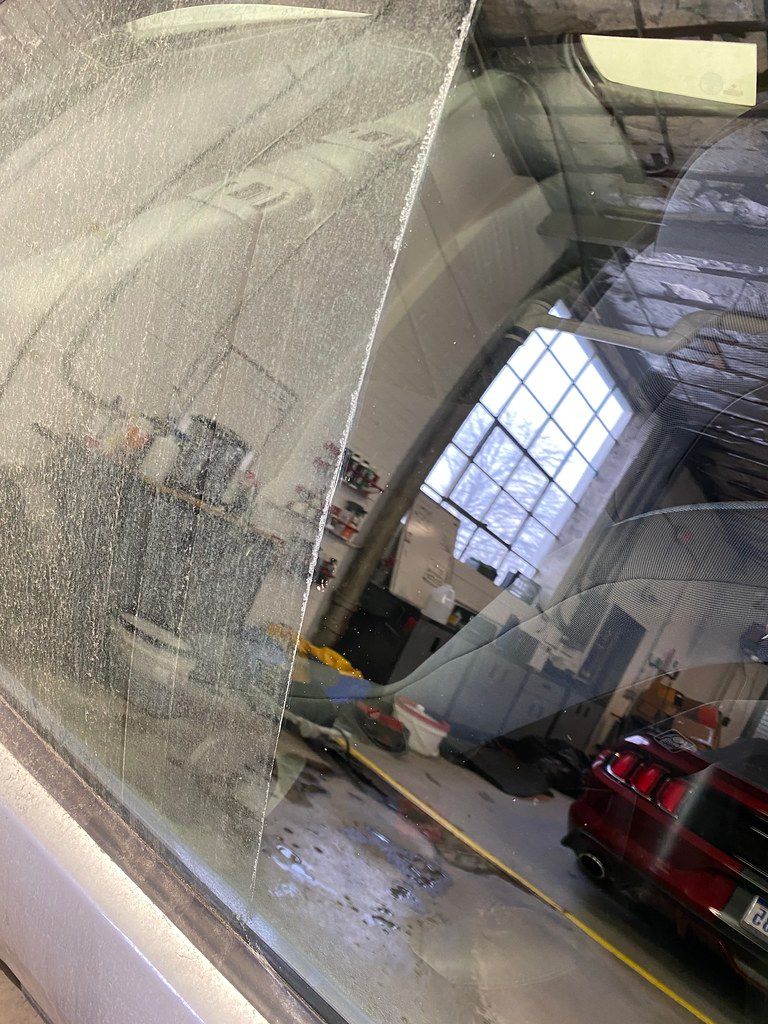
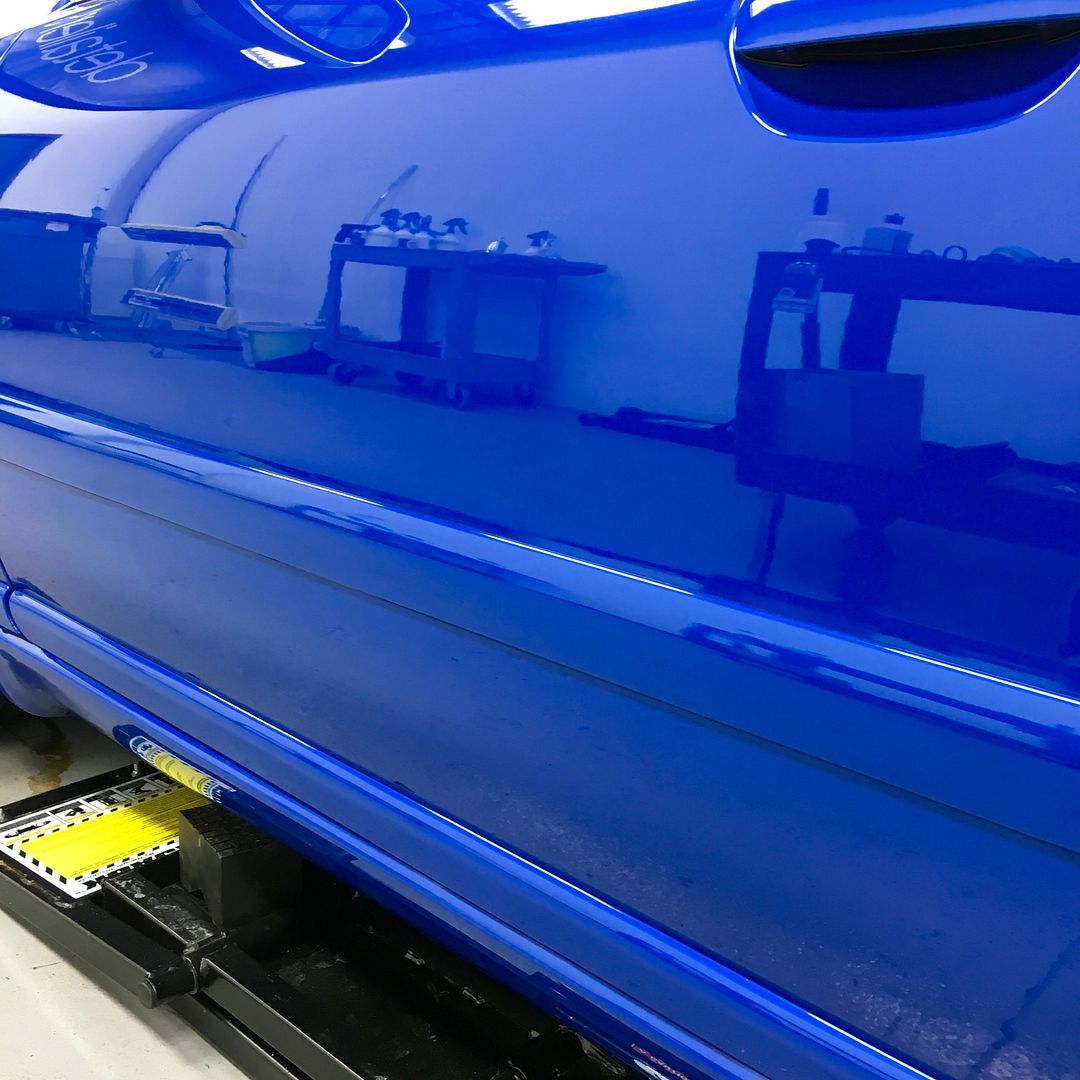
We have been installing paint protection film long enough that the cars we did years ago are coming back through the door. Some are in for a wash and a look. Some are in because the owner is selling the car and wants the film off. Some are in because a corner of the hood has started to look wrong and they want to know if the whole car is about to follow.
Standing in front of those cars, I can usually tell within a minute how the film was treated. A well kept five year old film on a quality install is almost invisible. The edges are still tight, the face still clears up in the sun, and the paint under it looks like the day it was covered. A neglected one, or a cheap one, tells on itself from across the shop.
Three things decide which of those two cars you end up with. The film that was chosen, the way it was installed, and what the owner did with the car for five years. Each one deserves its own explanation.
How film quality decides how PPF ages
Paint protection film is a stack. A clear urethane body, a top coat on the face that gives it the self healing behavior and the gloss, and an adhesive layer on the back. Every one of those layers ages, and the difference between a good film and a cheap one shows up in how gracefully each layer does it.
The top coat is what you see. On a quality film, the top coat stays clear and keeps healing light marring for years. On a cheap film, the top coat is the first thing to go. It hazes, it loses its ability to relax swirls back out, and it starts to feel dry to the touch. Once the top coat is gone, the urethane underneath is exposed to sun and chemicals directly, and that is where discoloration starts.
The adhesive matters just as much and nobody sees it until removal day. A properly formulated adhesive holds for years and then releases clean when heated. A poor one either lets go early at the edges or, worse, cures to the paint so hard that it comes off in flakes and leaves residue behind. That second failure is the one that turns a removal from a two hour job into a full day.
I wrote about what goes under your paint protection film earlier this year, and that post covers the slip solution and the bond. The short version for this one is that every film we put on a car is a film I would want to take off five years later.

How the install decides how PPF ages
Film failures almost never start in the middle of a panel. They start at an edge, a corner, or a relief cut, and those are all places the installer made a decision.
Edges are where the film meets air. A wrapped edge, where the film is tucked around the panel edge, has nothing exposed and nothing for a wash mitt or a pressure washer to catch. An edge that stops short of the panel edge leaves a tiny lip, and that lip collects dirt and wax and eventually gets lifted by the same thing every time, a wash. Where we can wrap an edge, we do. Where we cannot, the edge is cut clean and sealed with a final pass of heat so it lays down flat.
Stretch is the quiet one. Film has to be stretched to go around a bumper corner or a mirror cap, and there is a limit to how much it wants to be pulled. Overstretched film looks perfect on delivery day and then starts pulling back over months, because urethane remembers its shape. That pull back is what shows up as a lifting corner on a bumper a year or two in. A patient install uses heat to relax the film into the shape, and that is the difference between a corner that holds for five years and one that does not.
Relief cuts are where the installer slices the film so it can lay flat around a badge or a sensor. Each one is a place where two edges meet and a place where a poorly closed seam can start to open. Fewer relief cuts, placed where they follow a body line, age far better than a lot of them placed wherever was easiest.
How owner care decides how PPF ages
This is the part the customer controls, and it is the biggest part.
Wash habits come first. Automatic brush washes are the single fastest way to ruin an edge. The brushes carry grit and they whip across the film edges from every direction. A filmed car that goes through a brush wash every week will show lifted corners in a year regardless of how good the install was. A hand wash with a pH neutral shampoo, a soft mitt, and a plush drying towel does the opposite. Nanolex Pure Shampoo is what goes in the bucket in the shop, a pH neutral, highly concentrated wash with a lot of slip in it, and it will not strip whatever protection is sitting on the film. I laid out the whole process in how we wash a car wearing PPF.
Sun is second. UV is what breaks down the top coat over time, and a car that lives outside in the sun every day is asking more of the film than a garaged one. The film can take it, but the garaged car will look newer at five years. Parking in shade when you can, and keeping a sacrificial layer of protection on the film, both slow this down.
That protection layer is the third habit, and the one most owners skip. A bare film face takes every chemical and every UV hour directly. A ceramic coating over the film, or a maintenance product that refreshes it, gives the film a layer to lose before the film itself starts to lose anything. On a coated film, a wash with Nanolex WashCoat sprayed on the wet car after the shampoo and rinsed off within three minutes refreshes the existing coating, brings the gloss and the beading back up, and makes the next wash easier. It is a two minute step at the end of a wash, and five years of it shows.
What will your film look like at year five?
Three questions about how the car lives. The answer is what we would expect to see under the lights, and the one habit that would change it most.
Question 1 of 3
Does the car go through an automatic brush wash?
Even occasionally. Touchless tunnels count as no. Brushes are the question.
Question 2 of 3
Does the car sit outside in the sun most days?
A daily driver parked in an open lot at work counts as yes, even if it sleeps in a garage.
Question 3 of 3
Is there a coating or a maintenance product on the film?
A ceramic coating applied over the film, or a spray product refreshed at wash time. Bare film is a no.
Question 3 of 3
Is there a coating or a maintenance product on the film?
A ceramic coating applied over the film, or a spray product refreshed at wash time. Bare film is a no.
Year five outlook
Lifted corners, and they started around year one
Brushes carry grit and hit the film edges from every direction. On a filmed car that sees a brush wash, we expect lifted corners on the bumper and mirror caps within a year, and dark dirt lines under them by year two. The install quality barely matters at that point.
- The one habit
- Stop the brush wash. A hand wash with a pH neutral shampoo and a soft mitt is the whole fix, and it is the single biggest thing any film owner controls.
- What to do now
- Have the edges looked at. A corner that has just started to lift can sometimes be cleaned, heated, and laid back down. One that has collected a season of dirt means the panel gets redone.
 What we reach for Nanolex Pure Shampoo, 750 ml pH neutral, highly concentrated, a lot of slip. What goes in the bucket in the shop, and it will not strip what is on the film. View in the store
 Year five outlook
Tight edges, a tired face
Hand washing keeps the edges where the installer left them. Bare film in daily sun takes every UV hour and every chemical directly on the top coat, so by year five we expect the face to have lost some of its clarity and self healing, and a light or silver car to show staining where the top coat has thinned.
- The one habit
- Put a sacrificial layer on the film. A coating over the film, or a maintenance product refreshed at the end of each wash, gives the film something to lose before the film itself loses anything.
- Second most
- Shade when you can. A garaged car and an outdoor car with the same film and the same washing look a couple of years apart at year five.
 What we reach for Nanolex WashCoat, 500 ml Sprayed on the wet car after the shampoo, rinsed within three minutes. Refreshes the coating on the film and brings the beading back. View in the store
 Year five outlook
Holding up well, with sun as the only thing working against it
Hand washed and maintained, the film is being asked to do only what it was designed for. Edges stay tight, the face keeps clearing up in the sun, and the coating takes the UV and chemical hit instead of the top coat. On a car that lives outside, this is as good as it gets.
- The one habit
- Keep refreshing the layer on top. A coating over film wears faster than one on paint because it is sitting on a softer surface, so the two minute maintenance step at the end of a wash is what keeps it there.
- What to watch
- Bug and bird cleanup. Both etch through the coating first and the top coat second, so getting them off the same day is the difference between a wipe and a stain.
What we reach for Nanolex WashCoat, 500 ml Sprayed on the wet car after the shampoo, rinsed within three minutes. Refreshes the coating on the film and brings the beading back. View in the store Year five outlook
Mostly invisible, and it could look newer
A covered car that is washed by hand is most of the way to the film we like to see at year five. Edges tight, no staining, paint underneath untouched. Bare film still takes every wash chemical directly, so the face is a little duller and harder to clean than it needs to be.
- The one habit
- Add the sacrificial layer. A coating over the film, or a maintenance product at wash time, makes the face easier to wash and keeps the gloss where it was on delivery day.
- Worth knowing
- This is the car that comes off clean at removal. The paint under the film will be visibly deeper than the uncovered panels beside it.
What we reach for Nanolex WashCoat, 500 ml Sprayed on the wet car after the shampoo, rinsed within three minutes. Refreshes the coating on the film and brings the beading back. View in the store Year five outlook
The film you cannot find without a light
Covered, hand washed, and maintained. This is the five year old film that is almost invisible from across the shop. The edges are where the installer left them, the face clears up in the sun, and the paint under it looks like the day it was covered.
- The one habit
- Do not change anything. The only thing left to check is the install itself, which is why we still like to look at the edges once a year.
- At removal
- Quality film on a car like this pulls in one sheet per panel and the paint is left clean. Every chip and scuff of five years is in the film, and you see it for the first time on the way off.
What we reach for Nanolex Pure Shampoo, 750 ml pH neutral, highly concentrated, a lot of slip. What goes in the bucket in the shop, and it will not strip what is on the film. View in the store What yellowing and edge lift actually are
Yellowing is a discoloration of the urethane. Older films and cheaper films yellowed because the urethane itself reacted with UV. Modern quality films resist this far better, and true yellowing of the film body is now uncommon. What most people call yellowing on a modern film is something else. It is contamination trapped in an exposed edge, or a top coat that has hazed and is holding dirt, or the bare urethane picking up staining after the top coat has worn away. Those look yellow at a glance, and on a white or silver car they show badly. On an inspection light, the difference is obvious. A stained edge is a line. True yellowing is the whole panel.
Edge lift is exactly what it sounds like. The adhesive has released at the boundary and the film is standing off the paint by a fraction of a millimeter. Once it lifts, water and dirt get under it, the lifted area collects a dark line, and the line grows every wash. Edge lift starts from one of three causes. A short cut edge with a lip, overstretched film pulling back, or a brush wash that got under a corner. Caught early, a lifted edge can sometimes be cleaned, heated, and laid back down. Left for a year, the panel gets redone.

What a well kept five year old film looks like when it comes off
This is my favorite part of the job, because it is the proof. A customer brings in a car that has worn film since new, we heat a corner and pull, and the paint underneath is factory. The rock chips are all in the film. The swirls from five years of washing are in the film. The hood and the fender are the same shade because the sun never reached either one. Beside the uncovered areas, the paint that was under the film is visibly deeper and glossier, because it has not seen a single wash mitt or a single hour of unfiltered sun.
The film itself, off the car, tells its own story. Quality film pulls in one sheet per panel. The adhesive comes with the film, and the paint is left clean or with light residue that a solvent wipe handles. Looking at the face of the removed sheet, you see every chip and scuff the car took over five years, all stopped in the film. That sheet is the whole reason for the film, and you never see it until this moment.
What PPF removal involves
Removal is heat and patience. A heat gun or a steamer warms the film until the adhesive softens, and the film is pulled back on itself at a low angle, slowly, keeping the heat moving just ahead of the pull. Pulling cold or pulling fast is how film tears and comes off in strips, and it is also how a weak spot in the paint gets lifted with the film. Every panel gets checked for repaint before we touch it, because a repainted area with poor adhesion can come up with the film, and we need to know that before the first corner is lifted.
After the film is off, any adhesive residue is removed with a solvent made for the job, the paint is washed and decontaminated, and it goes under the lights. Film that was well cared for leaves paint that needs almost nothing. Film that was neglected sometimes leaves a faint edge line in the clear coat where the boundary sat, and a light polish takes that out. Then the car either gets new film, or a coating, or goes to its new owner looking better than most cars half its age. The BMW Individual cars we have done full PPF and ceramic coating on are exactly the ones where this pays off, because that paint cannot be bought again.
PPF longevity FAQ
How long does paint protection film last?
Quality film properly installed and properly washed lasts for many years and comes off clean. The film, the install, and the care each decide part of that. I do not put a number on it, because the same film on two cars with two owners ages very differently.
Does PPF turn yellow?
Modern quality film resists true yellowing well. What usually reads as yellow is contamination in an exposed edge or staining on a worn top coat. Both are avoidable with wrapped edges and regular washing.
Can lifted PPF edges be fixed?
Sometimes, if it is caught early. The edge is cleaned, heated, and laid back down. An edge that has been collecting dirt for a season usually means the panel gets redone.
Is it worth ceramic coating over PPF?
Yes. A coating gives the film a sacrificial layer against UV and chemicals, keeps the face easier to wash, and can be refreshed with a maintenance product at wash time.
Does removing PPF damage paint?
Factory paint that was in good condition when the film went on comes out clean. Repainted areas with poor adhesion can lift, which is why we check every panel for repaint before removal.
Can I take PPF off myself?
You can, with a heat gun, a lot of time, and a lot of solvent afterward. Most of the removals we do for people who started at home are finishing the last two panels they gave up on.
How do I know when my PPF needs to be replaced?
When the top coat has stopped healing and stays hazed, when edges are lifting in more than one place, or when the film has taken a hit that went through it. A quick look under our lights answers this.
The film is only as good as its edges and its owner
A five year old film with tight edges and a clear face is a film that was chosen well, installed with patience, and washed by hand. Any one of those three missing shows up at year two or three. All three together, and the day it comes off is the day you see what five years of protection was actually worth.
If you have film on your car and you are not sure how it is holding up, stop in. Looking at the edges takes a few minutes and it costs nothing.