Two cars, the same film
Park two cars side by side. Same brand of paint protection film, same warranty card in the glovebox, installed the same week.
Walk up close to the first one and look at the hood at an angle in the sun. There is a faint haze in one section, like the surface under the film has gone slightly cloudy. Near the edge of the fender there is a thin line where the film sits differently. Get closer and you find two or three dark specks under the surface, permanently.
The second car has none of that. Clean edges. The film reads as paint.
Everybody assumes the variable was the film. It almost never is.
What almost everybody sprays
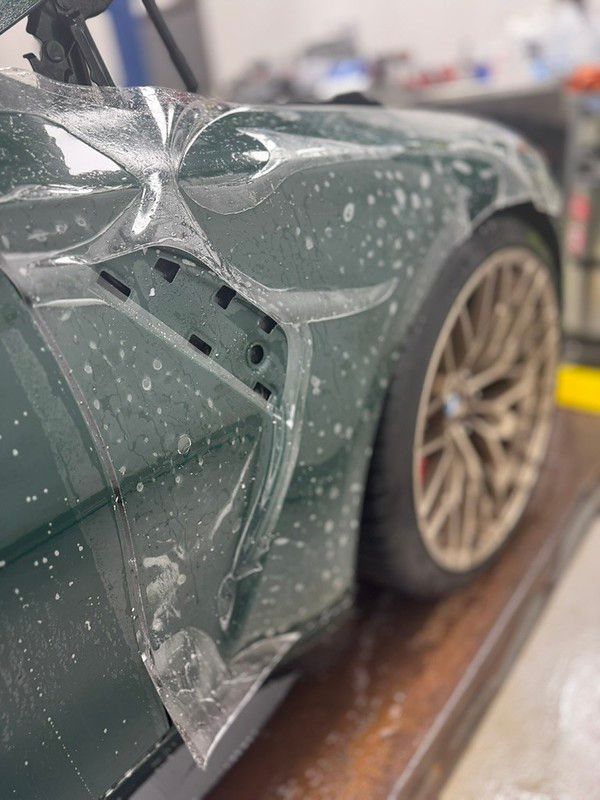
Film does not go on dry. Before it is laid down, the panel gets sprayed with a solution that keeps the adhesive from grabbing instantly, so the film can be positioned, stretched, and worked into the shape of the panel.
For decades that solution has been baby shampoo and water, mixed in a pump sprayer on the bench. I want to be fair about it, because it is what I used for years and plenty of good installers still do. It is not incompetence. It is inheritance. It costs almost nothing, and in the right hands it produces work most customers are happy with.
It has three problems though, and all three of them end up on your car.
It evaporates fast. You get two to five minutes of working time, and the timing shifts with the temperature of the shop, the temperature of the panel, and how much sun came through the bay door that morning. When it dries sooner than you expected, the film grabs before you are finished.
It runs off vertical panels. Doors, fenders, and quarters are the hardest surfaces on the car, and they are exactly where a thin solution sheets off before you can work the film properly.
It does nothing about dust. A slip solution cannot hold a particle. Anything floating in the air that lands on that wet panel goes under the film and stays there for the life of the installation.
The three things you are actually looking at
The defects have names, and once you know them you cannot unsee them.
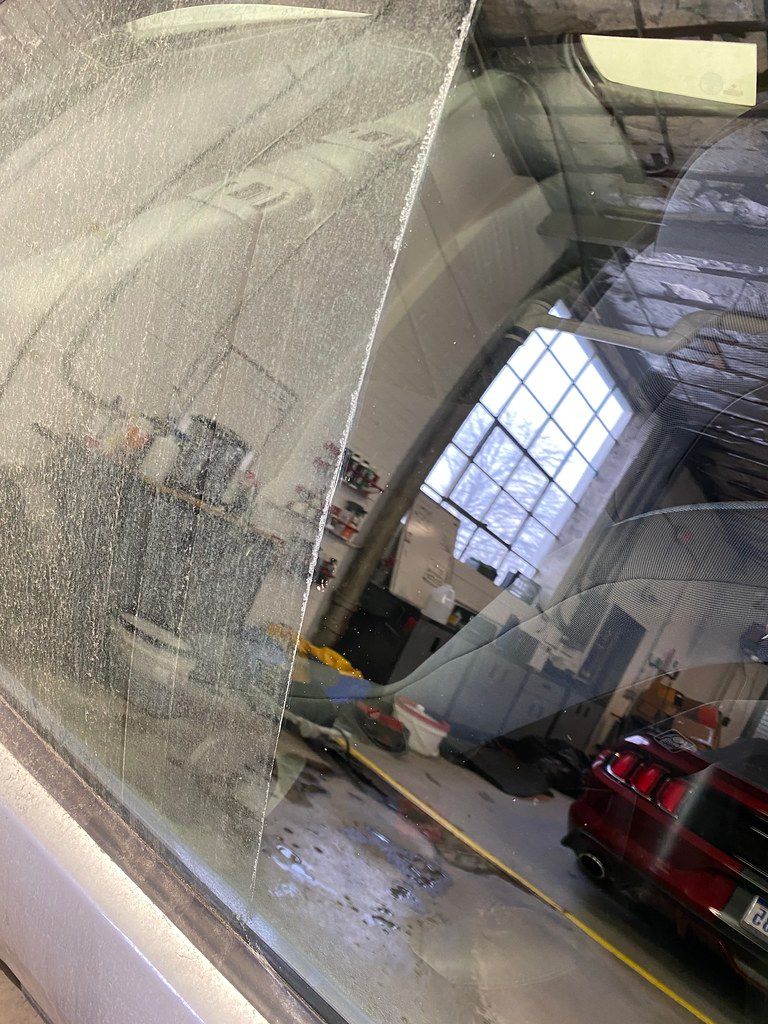
Silvering is the haze. A frosted, slightly cloudy patch under the film where solution stayed trapped instead of being worked out. In the sun it looks like the paint lost its depth in one spot.
Lift lines are the thin lines near edges and contours where the film settled unevenly. They show up along fender edges, hood corners, and anywhere the film had to stretch around a curve.
Trapped debris is exactly what it sounds like. Specks under the surface. There is no fixing it after the fact. The panel comes off and gets redone, or it stays.
Here is the part worth remembering. All three are installation defects, and the film manufacturer's warranty does not cover any of them. That warranty covers the film yellowing, cracking, or delaminating. It does not cover the dust your installer sealed underneath it.
What we changed
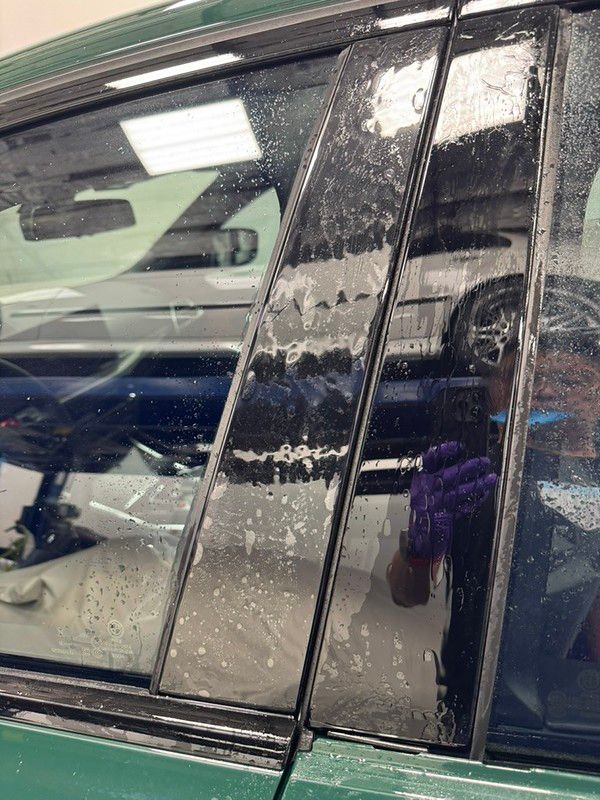
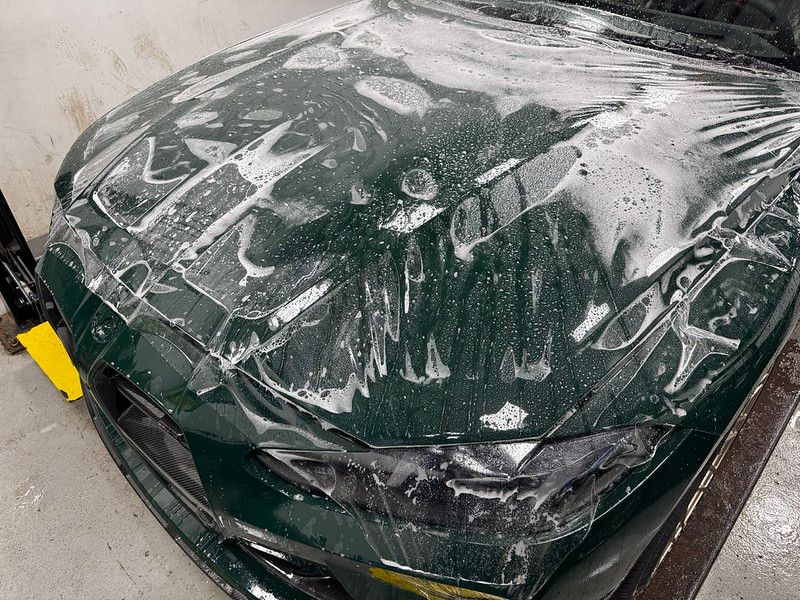
We switched to a purpose-built installation gel. The one we use is InstaGel, developed by Mike Norng, who has spent years teaching film and tint installation.
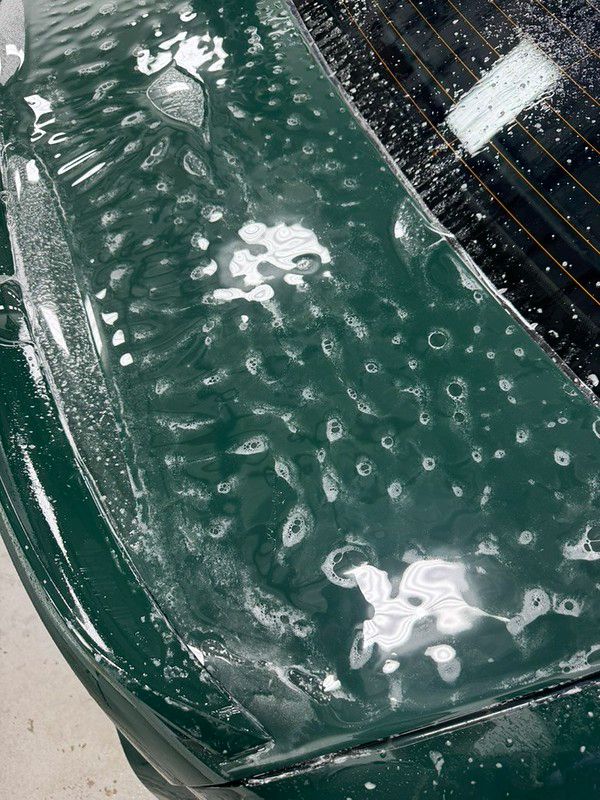
It is a gel rather than a thin liquid, and that one property fixes all three problems at once. Working time goes from two to five minutes out to eight to fifteen, and more to the point it is consistent. It behaves the same between fifty and ninety five degrees, so a February install and a July install are the same job. It stays where you spray it, so vertical panels stop fighting you. And it suspends debris instead of letting it float free, so particles ride out with the squeegee.
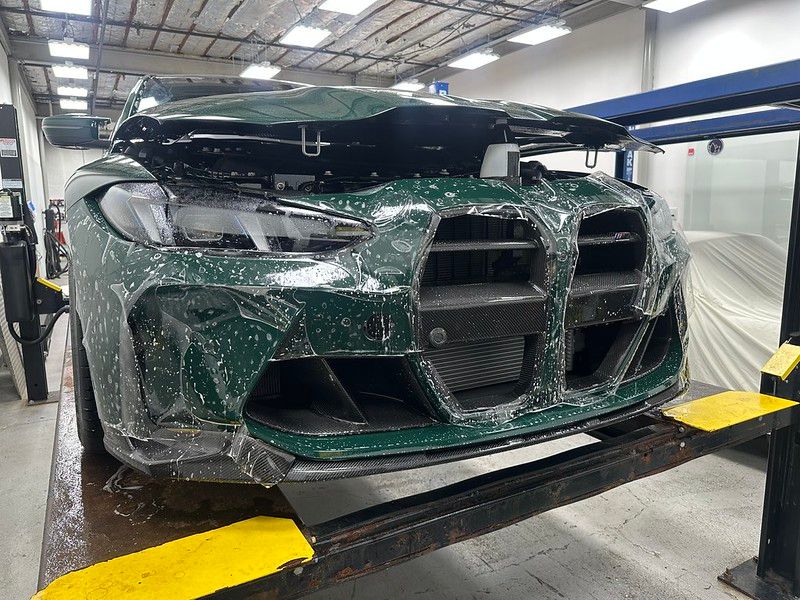
There is one more property that matters more than it sounds like it should. The gel holds the film without pre-tacking it, which means a panel can be lifted and reset without leaving an impression. On a complex front end, being able to pull a section back and start it again with no penalty is the difference between a clean job and a job with a compromise in it that only the installer knows about.
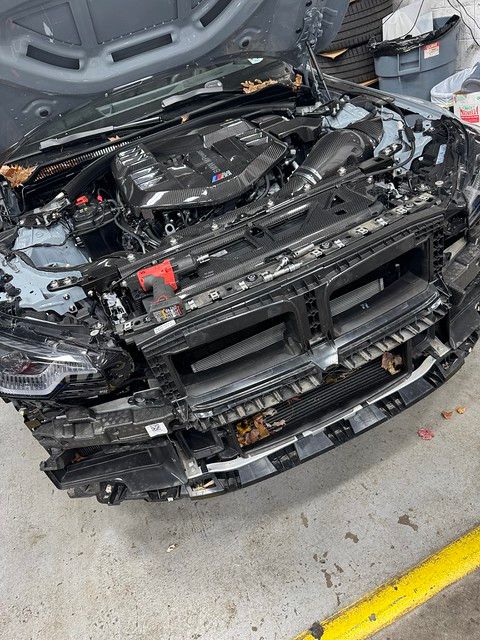
Vertical panels are where you notice it most. That is where the old solution failed first, and it is where the difference shows up in the finished car.
Why I bothered writing about a bucket of liquid
I know how this sounds. It is a consumable. It is the least interesting item in the building.
But you cannot judge a paint protection film installation by looking at the film, because every shop is buying from the same handful of manufacturers. Two shops quoting you on the same brand are quoting you on the same product. What separates the result is process, and process is the part nobody shows you.
So here is one piece of ours. We changed a consumable that costs us more per car than the alternative, to prevent defects most customers would never have known to blame us for.
We ended up believing in it enough to become the authorized New Jersey distributor, so we stock it for other shops and for anyone installing film themselves. That came after we had already been running it on customer cars, which is the only order that makes sense to me.
If you are getting quotes, ask whoever you are talking to what they spray under the film. It is a fair question and anyone who cares about their work will have an answer. Then when you pick the car up, look at the hood at an angle in the sun. You know what you are looking for now.