The film is tough. The edges are honest.
There are two kinds of people with paint protection film on their cars. The first kind figures the car is wrapped in armor now, so a gas station brush wash is fine. The second kind is afraid to touch it at all, and the car slowly goes gray under a layer of road film.
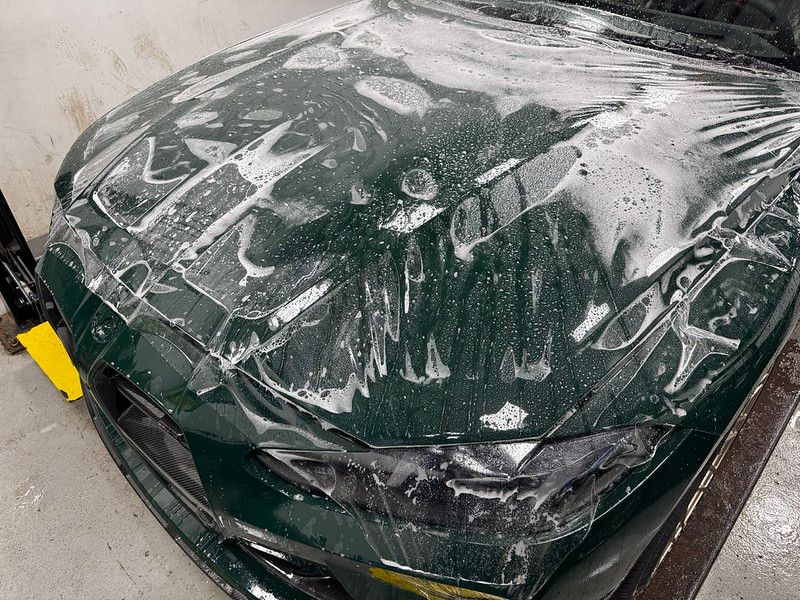
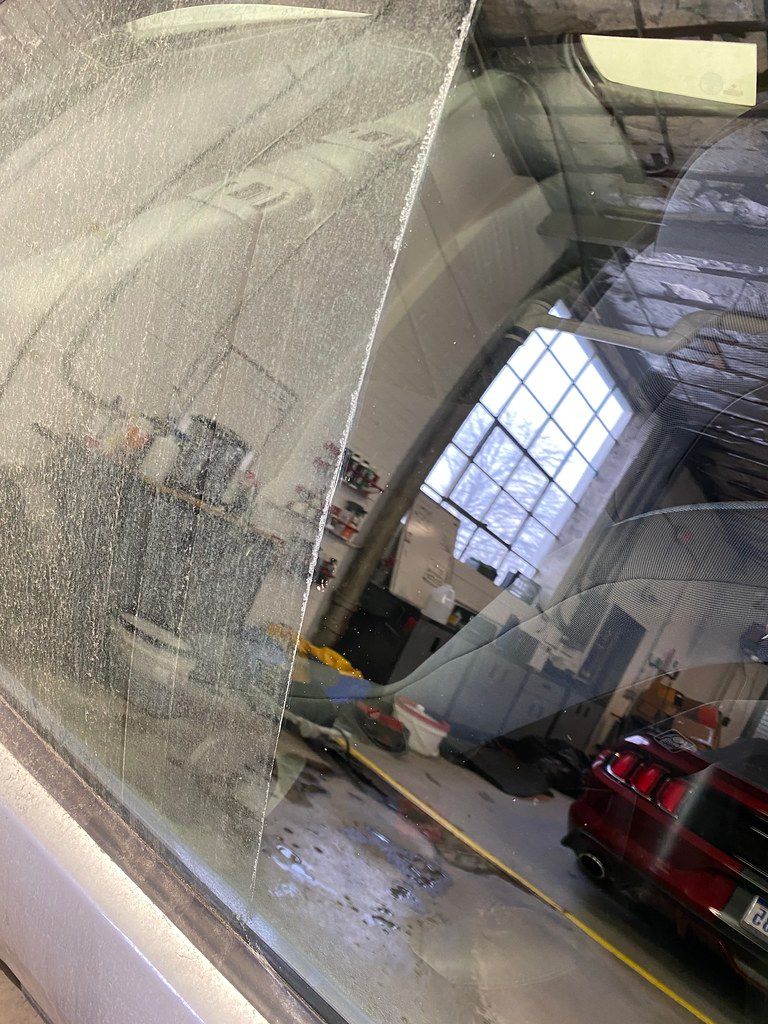
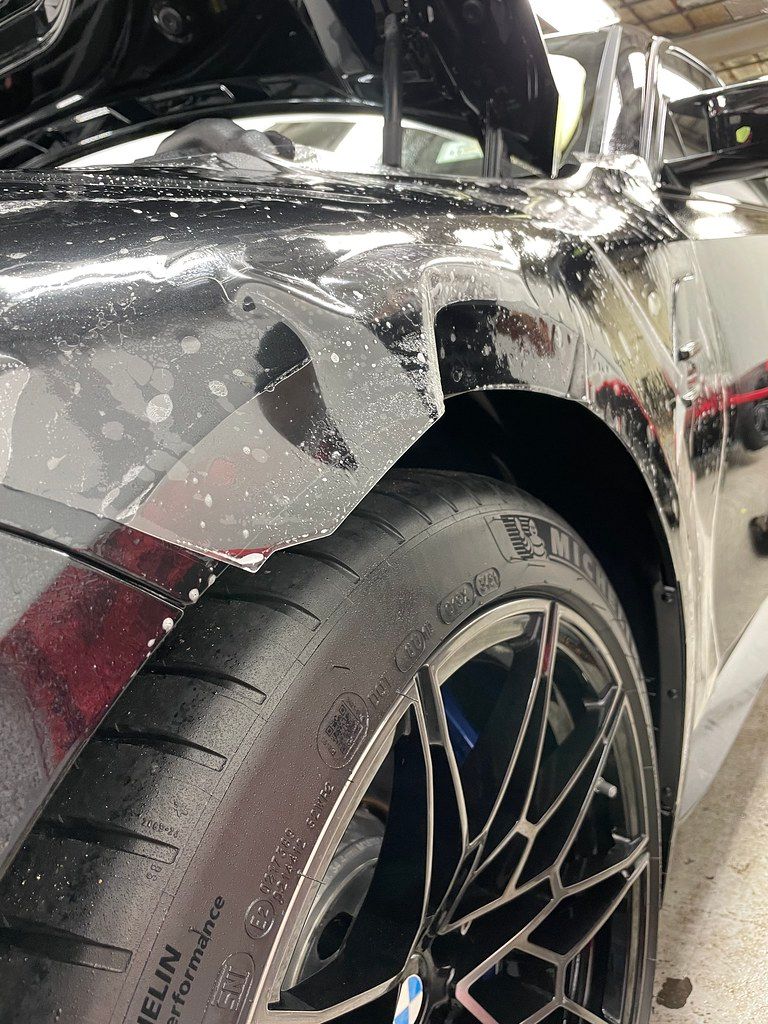
Both of them are wrong in an expensive way, and the reason is the same. The face of the film really is tougher than your clear coat. It absorbs impacts, and the self healing top coat lets light wash marring relax back out in the sun. But every panel of film has a boundary where the edge meets air, and nearly everything that goes wrong with film during a wash goes wrong at an edge.
So the way we wash a filmed car in the shop is built around one idea. Treat the face like paint, and treat the edges like the seam of a garment. You can be confident with the middle of a panel. You are careful at the seams.
The first week belongs to the film
If the film is fresh, the wash schedule starts with not washing. The installation gel under the film is still finishing its work in the days after the install. I wrote about what gets sprayed under the film a couple of weeks ago, and the short version is that the liquid needs time to fully flash out before the adhesive reaches its final bond.
For the first week, leave the car alone. Small moisture pockets and a faint haze during that period are normal and they resolve on their own. Rubbing at them with a towel is how a temporary condition becomes a permanent one. After a week, the film is ready for a normal life.
Let foam and water do most of the work
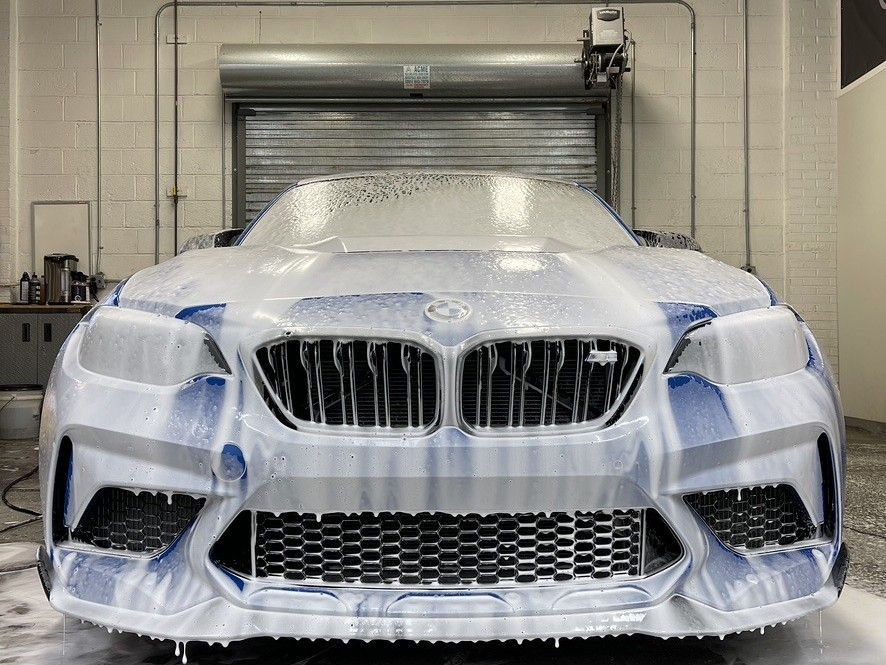
The goal of a safe wash is simple to say. Remove as much dirt as possible without touching the car, so that by the time your mitt makes contact there is almost nothing abrasive left to drag around. That is the entire point of the pre rinse and the foam stage, and it matters more on film than on paint, because heavy grit ground into the top coat can leave marks deeper than the self healing layer can recover.
Soap choice matters more than people think. Film top coats age fastest when strong alkaline degreasers hit them every single week. A pH neutral shampoo cleans a maintained car perfectly well without slowly cooking the film or the coating. In the shop we use Nanolex Pure Shampoo, partly because it is properly pH neutral and partly because it rinses clean. It leaves nothing behind, which means nothing builds up along the film edges wash after wash.
The pressure washer earns its keep here, with two rules. Keep an arm’s length of distance from the panel, and never aim the fan into an edge or a seam. Spraying along a filmed edge is fine. Driving water directly under it, week after week, is how edges start to lift years before they should. Around badges, sensor cutouts, and wrapped edges, I drop the pressure and let sheeting water do the work.
The mitt, the buckets, and the direction you wipe
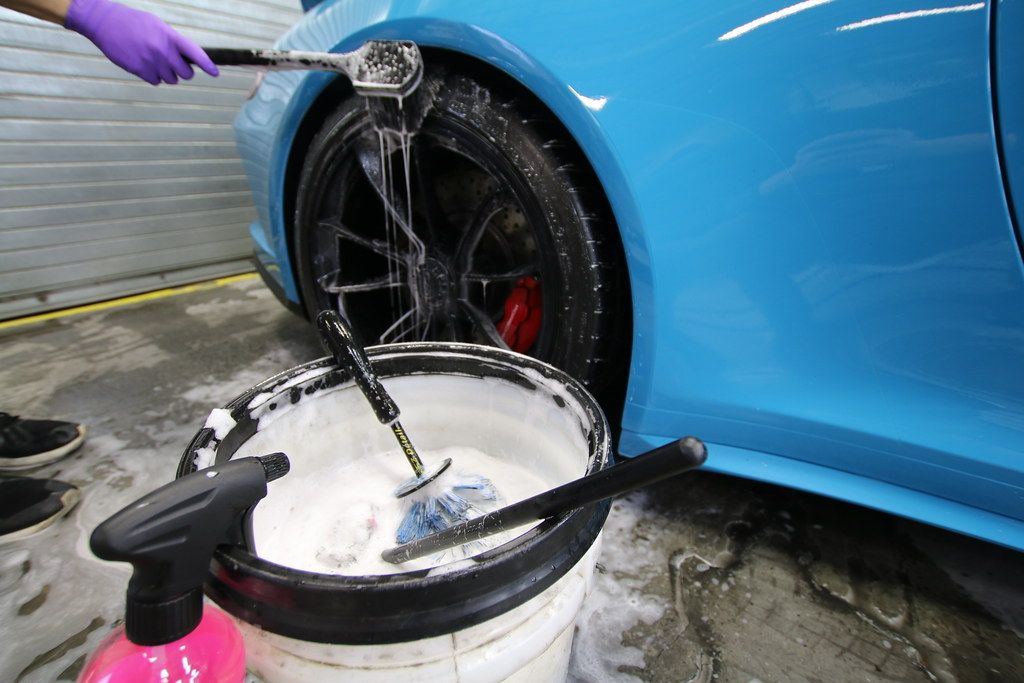
From there it is a normal two bucket wash, done with a light hand. Wash water and rinse water stay separate, the mitt gets rinsed before it goes back in the soap, and a grit guard keeps what you just removed from coming back to the paint. We use a deep pile microfiber mitt, the same one we sell in the store, because the long fibers pull grit up away from the surface instead of holding it against the panel like a flat sponge does.
Work top down in straight lines with almost no pressure. The film does not need to be scrubbed. Where the mitt crosses a film edge, wipe along the edge instead of across it. Wiping across an edge catches it the way a fingernail catches a sticker corner, a tiny lift every time. Along the edge, the mitt just glides past.
Drying is where filmed cars get hurt at home
Here is the counterintuitive part. The wash rarely damages film. Drying does, and so does not drying.
Not drying first. Water left to bake on film leaves mineral deposits, the same as paint, with one important difference. On paint, a bad water spot can be polished out with compound and a machine. Film only tolerates so much of that. The top coat is thin, and aggressive correction is not an option, so a spot that etches into film is far harder to walk back. If your water is hard, drying the car completely is not a cosmetic step. It is the protection.
Then the towel itself. A big plush drying towel laid flat and pulled gently, or pressed and lifted, takes the water off without leaning on the surface. We use the Autofiber Dreadnought in the shop, one towel for the whole car. What you do not want on film is a stiff bath towel, a chamois dragged dry, or any kind of water blade. A squeegee edge meeting a film edge only has to win once.
Last, the seams. Film edges, mirror bases, badge outlines, and panel gaps hold water and drip it back out for the next hour, and those trails dry into streaks. A blower, or even the exhaust side of a shop vac with a clean nozzle, chases the water out of the seams in two minutes. It is the single most shop looking habit you can steal for a driveway wash.
What stays away from the film
Automatic washes with brushes are off the table. The brushes carry the grit of every car that went before you, and the pressure and the whipping action they put into a film edge is exactly the acrosswise abuse the edges cannot take. A touchless wash on a road trip will not kill the car, but the chemicals touchless washes rely on are strong, so I treat that as an occasional rescue and not a routine.
Solvent heavy products deserve respect around film. Tar removers and strong bug removers are useful tools, and we use them, but sparingly and never allowed to sit and wick along an edge. The same goes for trim dressings loaded with petroleum solvents. Wipe them on the trim, not up to the film boundary.
Bugs and bird droppings are the one thing filmed car owners should be quick about. Both are acidic, and heat accelerates what they do to any surface, film included. A bottle of rinseless wash and a soft towel in the trunk handles it at a rest stop. Everything else about film ownership is patient. That one is not.
A ten second inspection while you dry
The drying pass is also the inspection pass. As the towel moves around the car, glance at the edges you are wiping along. What you want to see is nothing. Film sitting flat, edges tight, no dirt line creeping under a corner. If an edge ever starts to lift or collect a dark line, that is not a wash problem, and catching it early is the difference between a small fix and a redone panel. Bring the car by and we will look at it. That look costs nothing.
A filmed car that gets washed like this looks the way it did on delivery day for a very long time. The film was the expensive part. The wash that keeps it honest costs a bucket of good soap and twenty careful minutes, and most of those minutes are the same wash you were already doing. The edges just ask you to notice them.